Alpha Schools Put AI Front and Center in the Classroom
Five years after the COVID-19 pandemic, public schools continue to see both a decline in enrollment and test scores as attempts to recover from online centered learning have stalled.
With the rapid increase in the use of artificial intelligence (AI) one network of private schools has risen to the fore with their AI-driven approach. Alpha schools, which was founded by Stanford alumni and former mortgage lender MacKenzie Price in 2014 when her oldest daughter who was in second grade at the time told her that she didn’t want to go to school at the time because it was “boring.”
Price then developed a K-12 school where AI is at the center of the educational experience. By leveraging personalized, adaptive software for core academics, Alpha schools promise to revolutionize how students learn, freeing up valuable time for a more holistic, skills-based curriculum.
The core of the Alpha model is its “2 Hour Learning” platform. This system utilizes AI to deliver all core academic subjects—from math and reading to science and social studies—in just a two-hour morning session, with breaks in between. The AI acts as a personalized, one-on-one tutor, assessing each student’s knowledge in real time and ensuring they achieve mastery of a concept before moving on. This mastery-based learning allows students to progress at their own pace, accelerating through familiar topics and spending more time on areas where they need support. The result, according to the school, is that students learn twice as fast as their peers in traditional settings.
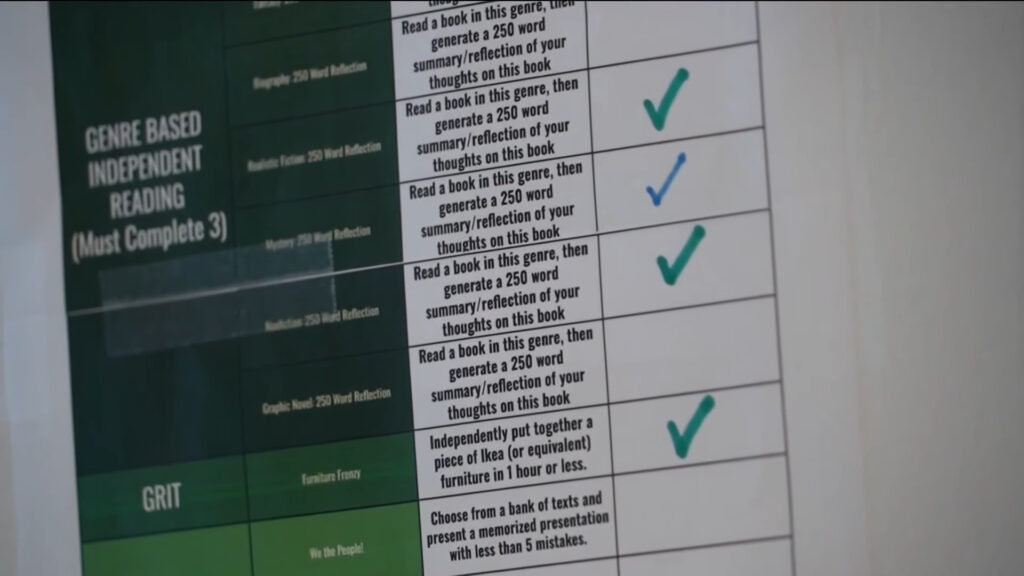
With academics streamlined, the remainder of the school day is dedicated to a crucial second pillar: life skills. In the afternoons, students at Alpha schools engage in hands-on workshops and projects led by adult “Guides” rather than traditional teachers. These sessions focus on real-world competencies like public speaking, financial literacy, coding, and entrepreneurship.
The students who attend Alpha schools like the fact that they can learn at their own pace, which often means reaching above their grade level, something public education frowns upon as they strive to keep all students at the same level regardless of ability.
This approach isn’t cheap, with tuition estimated to cost between $40,000-$75,000 depending on the location of the school and curriculum offered. But even with these rates that haven’t deterred parents who want their children to be challenged and not bored on their path to a better future.
Don Irvine
Donald Irvine is the chairman of of Accuracy in Academia (AIA), a non-profit research group reporting on bias in education. Irvine follows his father’s legacy, Reed Irvine, to critically analyze the liberal media’s bias and brings over thirty years of media analysis experience. He has published countless blog posts and articles on media bias, in context of current events, and he has been interviewed by many news media outlets during his professional career. He currently hosts a livestream weekly show on AIA’s Facebook page which discusses current events.
Irvine graduated from the University of Maryland and rose up the ranks to become chairman of Accuracy in Media until his transition to AIA.
He resides in the suburbs around the nation’s capital and is a proud father and grandfather.