TPUSA Turns a Bad Essay Into a Culture War
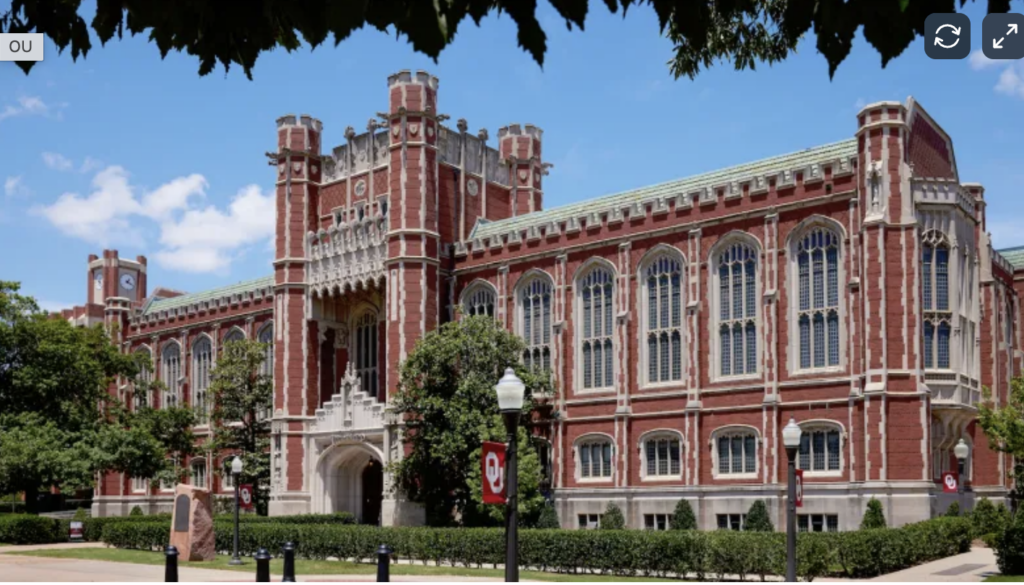
Turning Point USA (TPUSA) is back on campus pretending to fight for “free speech,” which is impressive for an organization that can’t survive ten minutes of honest reading comprehension. Their newest martyr is Samantha Fulnecky, a psychology student at the University of Oklahoma who wrote an assignment so far removed from the actual instructions that TPUSA’s OU chapter had to crop the screenshots just to keep the grift alive.
Fulnecky didn’t turn in a psychology reflection. She turned in a sermon. Instead of responding to the assigned article, examining empirical findings, or showing the faintest awareness of psychological research, she spent 650 words explaining that God made women gentle, men courageous, and any recognition of gender diversity “demonic.” None of that answers the prompt. None of that reflects engagement with evidence. It wasn’t a reaction paper, it was a testimony.
The instructors’ comments weren’t ideological. They were exhausted. They explained that they weren’t deducting points for her beliefs, but because the paper didn’t answer the assignment, contradicted itself, substituted theology for evidence, dismissed peers, and labeled an entire group of people “demonic.” They even offered resources, additional discussion, and clarification of scientific consensus. They responded the way educators do when handed a paper that belongs on Facebook next to Minion memes and chain prayers.
And right on cue, TPUSA OU swooped in to turn a routine grading issue into a full-blown culture war melodrama. They blasted the essay online, framed it as a Christian martyrdom story, and then closed their post by calling the instructor “mentally ill.” Nothing signals your devotion to free speech quite like demanding professors be removed from the classroom for using a rubric.
In the screenshots TPUSA OU circulated, the assignment prompt is conspicuously missing. That’s because the real prompt required analyzing the assigned article, citing evidence, and connecting psychological research to personal experience. Fulnecky didn’t do that. She didn’t even try.
That’s why reactions outside TPUSA’s orbit, from across the ideological spectrum, have been so brutal.
The Friendly Atheist walked through the essay line by line and pointed out the obvious, Fulnecky wrote a Bible argument for a psychology assignment and expected an A. Not one empirical claim was supported, and much of the writing directly contradicted the assigned reading. From that perspective, the zero wasn’t “anti-Christian,” it was the logical outcome of turning in the wrong genre of writing entirely.
Even the Oklahoma Council of Public Affairs (OCPA), a conservative outfit usually sympathetic to claims of anti-Christian bias, framed the situation as part of a broader recurring pattern at OU, students bringing non-academic arguments into academic settings and then crying persecution when those arguments aren’t graded as scholarship. OCPA’s coverage didn’t buy TPUSA OU’s narrative wholesale, instead, it treated the episode as yet another skirmish in an ongoing campus culture cycle, not a smoking gun of institutional religious discrimination.
This critique also showed up from conservatives outside Oklahoma. Brian Griffiths, writing separately at The Duckpin, warned that TPUSA has now become the exact thing it claims to hate, an outrage factory demanding firings, demanding ideological conformity, and demanding A’s for students who don’t meet basic academic standards.
OU’s decision to place the instructor on administrative leave doesn’t validate TPUSA’s narrative, it undercuts it. Suspension isn’t punishment, it’s procedure. Any formal complaint triggers a mandatory review, and this is the HR playbook every university follows. OU may very well end up supporting the instructor once the investigation is complete because process is not ideology. But that nuance doesn’t matter to TPUSA. Even if the final report clears the instructor and confirms the grading was academically justified, they will still treat Fulnecky as a martyr. They needed a villain, but OU acted like a bureaucracy, not a culture war caricature, and TPUSA can’t afford to admit that.
Samantha’s mother, Kristi Fulnecky, is a former Springfield, Missouri, city councilwoman whose tenure ended in controversy, including a recall effort and her eventual resignation. She later represented a Jan. 6 defendant in federal court in Washington, D.C., describing him and others as “political prisoners.” But DOJ records tell a very different story. Her client, Jared Owens, was charged with multiple felonies, assaulting law enforcement with a dangerous weapon, helping shove a barricade that fractured an officer’s hand and wrist, breaching the Capitol, and physically attacking another officer inside the building. It’s the same alternate reality playbook, violent rioters recast as patriots, and a routine failing grade recast as religious persecution, a family tradition of turning ordinary consequences into political theater.
My previous piece on TPUSA Faith’s Holy War Machine helps explain why this happens so predictably. Once TPUSA built a hybrid political religious machine that depends on perpetual escalation, every classroom disagreement becomes a fresh opportunity for mobilization and outrage. This OU incident fits that pattern exactly, a small, local dispute inflated into a culture war prophecy to feed the machine.
Even everyday users on X understood it immediately. One reply nailed it,
“TPUSA, ‘DEI IS BAD.’ Also TPUSA, ‘This student deserves an A despite being functionally illiterate, solely because she wrote about Jesus, oh and the professor must be fired.’”
When random people online are producing more honest analysis than a national organization, something has gone very wrong.
Fulnecky isn’t a free speech hero. She’s a student who turned in the wrong assignment. And TPUSA OU isn’t defending academic freedom. They’re drama farming it. If they cared about intellectual diversity, they would have posted the prompt, the rubric, and the department’s expectations. If they cared about student integrity, they wouldn’t have sicced the internet on a grad instructor by mocking her gender identity and mental health. If they cared about Christianity, they wouldn’t use a student’s faith as a prop.
What they care about is outrage, the kind that generates attention, donations, and another round of campus victimhood tours. The kind that tells their followers that facts are optional, research is oppressive, and any attempt at academic standards is persecution.
This wasn’t about free speech. It wasn’t about faith. It wasn’t about a grade. It was about creating another campus battlefield, one more clip for the culture war highlight reel. And until TPUSA demands even the bare minimum honesty from its chapters, context, transparency, integrity, they will keep showing us exactly who they are, not defenders of students, but opportunistic arsonists who never stick around to put out the fire.
TPUSA didn’t defend a student. They just proved, again, that nothing in America is too small or too stupid to weaponize if there’s clout on the table, and a fresh round of fundraising emails to blast out the moment the outrage machine starts humming.
Reprinted with permission from The Quinton Retort

Jeff Quinton