University of Oregon Faces Real-World Budget Issues
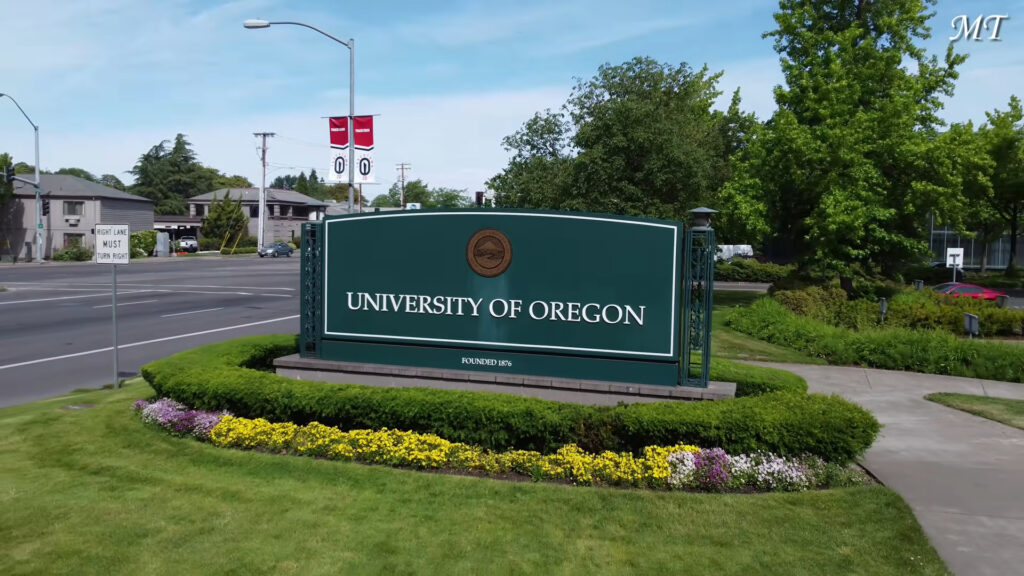
The fiscal chickens have come home to roost at the University of Oregon (UO). In a stark announcement, UO President Karl Scholz revealed that the university must slice a staggering $65 million from its budget to stave off an ongoing annual deficit. This comes less than a year after a brutal $30 million round of belt-tightening that resulted in more than 170 eliminated positions and heavy cuts to humanities departments.
To stem the bleeding immediately, the administration has instituted an immediate hiring freeze, halted pay adjustments, and capped nonessential travel.
The immediate catalyst for this latest emergency is a projected, significant drop in incoming out-of-state freshman enrollment. In UO’s case tuition accounts for roughly 80% of its Education and General Fund, with high out-of-state tuition fees heavily subsidizing in-state students to prop up university operations. Nonresident students make up nearly half the student body, meaning even a minor dip in their numbers triggers an outsized financial earthquake.
President Scholz listed various macro-level excuses for the decline, including “demographic shifts,” economic uncertainty, and a “declining trust” in public higher education. These shifts however didn’t just spring up overnight but have been developing for years going back to at least 2020 when Covid changed attitudes about the value of a college education and the explosion of online learning.
The administration ignored these real-world issues and like many colleges and universities continued to operate as if nothing changed. Like most other schools UO suffers from rampant administrative bloat. While specialized administrative offices and non-academic bureaucracies have expanded, the core academic mission has shrunk. Rather than trimming the top-heavy administrative state, the university’s first instinct in past crises has been to target faculty lines and look at eliminating legacy academic programs like classics, religious studies, and German.
The cutback in academic programs is not necessarily a bad thing as enrollment shrinks, but ignoring the administrative bloat is and UO appears to be blind when it comes down to the best ways to trim a bloated budget much to its own peril. If they don’t get a handle on this, these budget cuts will not be last.

Don Irvine
Donald Irvine is the chairman of of Accuracy in Academia (AIA), a non-profit research group reporting on bias in education. Irvine follows his father’s legacy, Reed Irvine, to critically analyze the liberal media’s bias and brings over thirty years of media analysis experience. He has published countless blog posts and articles on media bias, in context of current events, and he has been interviewed by many news media outlets during his professional career. He currently hosts a livestream weekly show on AIA’s Facebook page which discusses current events.
Irvine graduated from the University of Maryland and rose up the ranks to become chairman of Accuracy in Media until his transition to AIA.
He resides in the suburbs around the nation’s capital and is a proud father and grandfather.